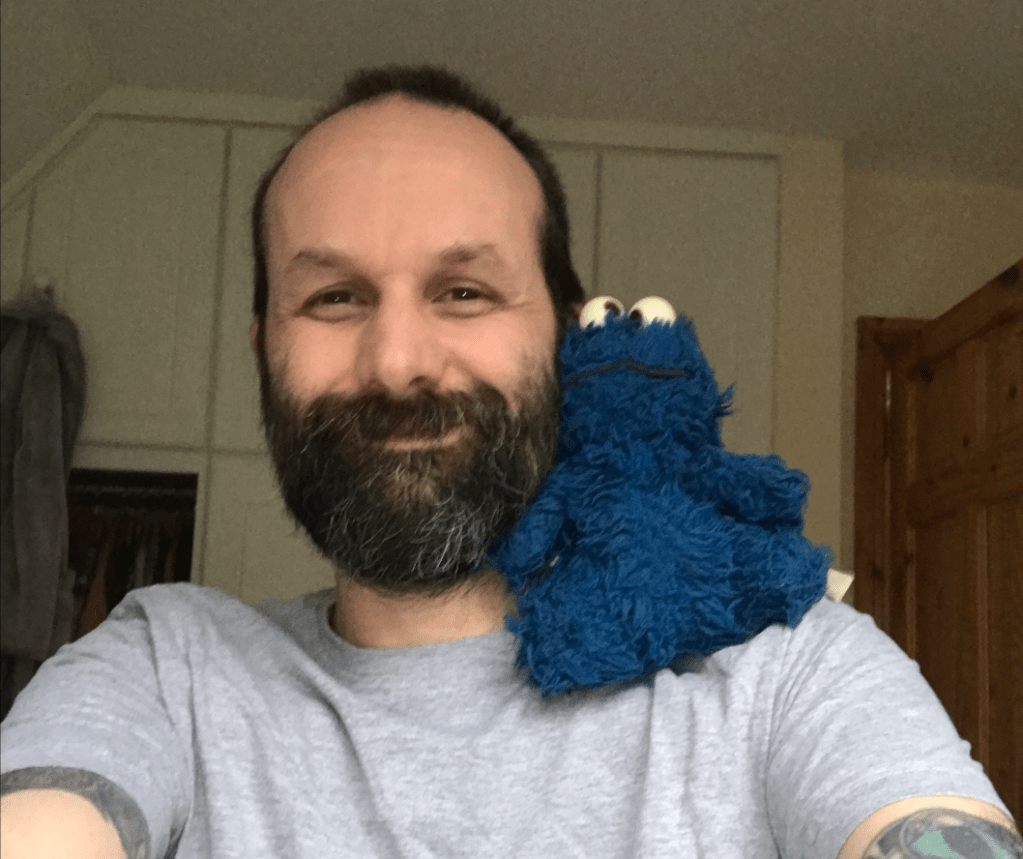
My oldest friend, Cookie Monster, travelled with me to California. He’s a year younger than me.
I’d planned to settle in Germany after leaving Poland. After a year, I was feeling more confident about that plan. I had a stable address with lovely flatmates after two “temporary situations,” one with a drug dealer and one with a lovely person who realised a week after I moved in that she’d rather live alone. I had enough work to get by. Most importantly, I had met a D&D group (don’t you judge me for my priorities!).
However, I came across an opportunity that I didn’t want to turn down. It would involve living in the U.S. for at least eighteen months, in Phoenix, the Bay Area or Austin. I had friends in both the Bay Area and Austin, but for an eighteen-month period, I’d feel safer and more comfortable in California than in Texas.
However, there was a sticking point: when I was applying for the visa, I was told in no uncertain terms by the embassy worker that I should avoid including any information about long-term disability. She pointed at the wheelchair and said to say it was a sports injury, temporary, if I was asked. She didn’t want to know the truth about it herself, holding up a hand to stop me saying anything. “If you say you have anything, depression, diabetes, broken spine, anything, we can reject your visa. So it’s temporary.” I remember the three examples she gave because in all my years of living abroad, getting visas and work permits, I’d never visualised what this discrimination could look like. I’d seen visa application forms that asked you to declare any ‘major physical or mental’ conditions. I had even declared my visible disabilities on documents for Polish visas (back when Irish people needed them to live there), but I’d never been met with any opposition.
I was so nervous about the whole situation: the opportunity was deeply important to me but I felt like I was going into it with this huge lie hanging over me, not only with regard to my visible disability but also related to my neurodivergence and mental health. Maybe if I wasn’t neurodivergent, I wouldn’t have been as anxious about it. Certainly, if this happened to me now, I would’ve made a stand and either rejected the opportunity or filled out the forms honestly. But at the time, pre-therapy and barely financially stable, that didn’t even occur to me.
So I checked “no” to any questions asking about health issues and resolved that I wasn’t going to travel with my wheelchair the first time I flew on the visa (which was incredibly stupid and risky), and I also sent my medications to California with an American friend rather than risking having to talk to customs about having three months’ worth of gabapentin and baclofen in my baggage.
The decision to go to the U.S. without feeling comfortable to be open about my disabilities would affect my whole time there. And, though I didn’t know it at the time, it would have two profound impacts on my hearing difference.
Want to support the blog, which is going to be my primary source of income moving forward? I have a Patreon account here, a Liberapay account here, and a PayPal account here.
 Partner and Ally