I’m not going to sugar-coat this: putting in hearing aids for the first time is disorienting and painful. I have yet to meet anyone who started wearing them as an adult who says anything different. It’s not a heartwarming moment of joyful connection with sound you’ve been missing.
It doesn’t matter whether they might help you pick up sounds that have been out of your range. It doesn’t matter whether they will temporarily or permanently allow for some level of verbal communication with hearing people. It doesn’t even matter if you believe they’re the only thing standing between you and losing some connection that’s important to you. Whatever benefit they bring you comes later. None of that counts in the first moment they’re switched on.
In that moment, your first instinct will probably be to take them straight out of your ears again.
Hearing aids are essentially a microphone/speaker system, designed to amplify frequencies of sound that you can’t perceive. If your ears aren’t registering sounds with a frequency of 2000 Hertz if they’re below 40 decibels, the hearing aids can boost those sounds to the point where your ears should pick them up. The good hearing aids are the ones that can be tailored to the ear, with different levels of output across the frequencies. The bad ones just boost across the board with no selectivity.
Regardless of type, the sound that comes through the first few times is too loud, too tinny, too jagged. It’s discordant and strident. Every frequency your ears have been straining to capture is suddenly punching its way to the centre of your head. I’ve heard it likened to turning on a television that’s turned up to maximum volume in a quiet room; to sticking your head into a room full of running power tools and blenders; and to being trapped in a lift with two people having a screaming argument.
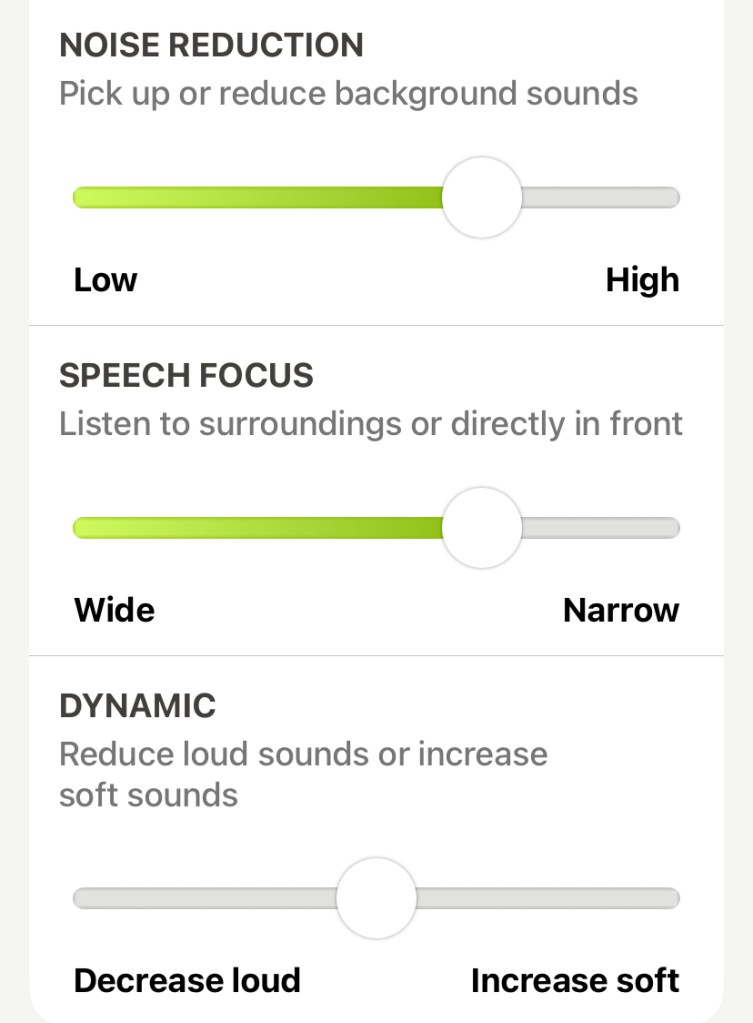
Good hearing aids will come with different programme settings for noisy and quiet environments. Really good ones will allow you to programme some yourself and save them. But the first time you switch them on, even if it’s a muted setting, it’s loud.
It doesn’t stay like that but the first week (or weeks, depending on your system and the number of times you have to go back for adjustments), sound brings little joy. Beyond that, you may also find the devices themselves uncomfortable as the earpiece needs to be fairly deep in your ear to avoid feedback and, if they have a part behind your ear, you’ll have an unfamiliar weight and movement to get used to.
My advice: for the first few weeks, wear them for short periods — a couple of hours at a time — in relatively controlled environments as you get used to the feel of them and their “interpretation” of sounds. Don’t exceed a total of six hours a day at first, slowly build up from there. Work out the programmes that you need to adjust. Don’t be afraid to go back to the audiologist for adjustments and support. Let yourself grow slowly accustomed to these noises that you didn’t even know you weren’t hearing.
Eventually (unless you have particularly bad hearing aids or a hearing difference that isn’t helped by them and provided you have some support), you should find that things start sounding less strident, less metallic, less hollow. That’s the sign that your brain is drawing on memory and other information to interpret the sound that’s being pushed into it in a way that feels more organic. Then you should find the other truth: hearing aids are much like glasses. You should get used to them, you might even start to forget they’re there, you may come to enjoy having them. But on that score, your mileage may vary.
Want to support the blog, which is going to be my primary source of income moving forward? I have a Patreon account here, a Liberapay account here, and a PayPal account here.


[…] so many discomforts initially, so many things I was having to work around (for advice on that, read the previous post). However, there was also a social aspect: people’s running […]
LikeLike